
Liver Health Supplements: What to Know Before You Buy

Liver health supplements include herbal products, nutritional ingredients and combination formulas marketed for general liver support, antioxidant support or related wellness purposes. Because products in this category can differ considerably in ingredients, labelled indications and directions, it is useful to compare what each product actually contains rather than relying on terms such as “detox”, “cleanse” or “liver tonic” alone.
This guide explains common ingredients found in liver health supplements, how to compare product labels, what an AUST number can tell you and why supplements should not be used as a substitute for medical assessment of liver symptoms or diagnosed liver conditions.
Supplements should complement — not replace — a balanced diet, regular physical activity, appropriate alcohol limits and professional healthcare where needed.
What Are Liver Health Supplements?
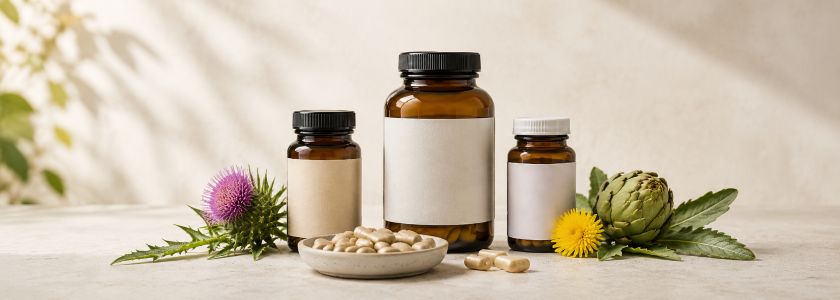
Liver health supplements are a broad category rather than one single type of product.
Depending on the formula, products may contain:
- milk thistle, also known as St Mary’s thistle;
- artichoke;
- dandelion;
- other herbal ingredients;
- N-acetyl-L-cysteine (NAC);
- antioxidant or nutritional ingredients;
- amino acids or related compounds; or
- multi-ingredient combinations.
The presence of a familiar ingredient does not automatically mean that two products are equivalent. Extract strength, ingredient amounts, serving size, labelled indications and accompanying ingredients can all differ.
Start With What the Liver Actually Does
The liver performs many important functions. These include processing nutrients, producing bile, storing certain nutrients, making important proteins and helping the body process waste products, medicines, alcohol and other substances.
A healthy liver already plays a central role in the body’s normal processing and removal of waste substances. For this reason, a supplement should not be viewed as a way to “flush” or mechanically cleanse the liver.
If you are considering a product because of abnormal liver tests, suspected fatty liver, hepatitis, persistent symptoms or another possible liver condition, the appropriate first step is medical assessment rather than selecting a supplement.
Be Careful With “Detox” and “Cleanse” Claims
Terms such as “detox”, “cleanse” and “liver tonic” are commonly used in the broader wellness market, but they can mean different things between products.
They should not be interpreted as evidence that a product removes toxins from the liver, reverses liver damage or treats liver disease.
Healthdirect Australia advises that there is little evidence supporting claims that liver detoxes, cleanses and supplements work, and notes that the liver and kidneys already perform important waste-removal functions.
When comparing a product carrying detox-style language, look past the front label and check:
- the exact active ingredients;
- the amount of each ingredient;
- the approved or labelled indications;
- the recommended dose;
- the warnings and precautions; and
- whether the product is appropriate alongside any medicines or other supplements you use.
If you want to compare the broader range of products sold under this type of terminology, see the Detox & Cleanse category, while keeping the distinction between marketing terminology and medically established liver treatment in mind.
Milk Thistle and St Mary’s Thistle
Milk thistle, also called St Mary’s thistle, is the plant Silybum marianum. Its extracts commonly contain a group of compounds referred to as silymarin.
It is one of the best-known herbal ingredients used in liver support formulas, but the presence of milk thistle does not by itself establish that a product will prevent or treat liver disease.
Research into milk thistle for liver conditions has produced mixed or limited results, so it is useful to distinguish between a product’s permitted or traditional-use wording and stronger claims that would require more robust evidence.
When comparing milk thistle products, check:
- whether the product lists whole herb, an extract or both;
- the amount of extract supplied per recommended dose;
- whether the extract is standardised to particular constituents;
- the equivalent dry-herb amount if stated;
- whether milk thistle is the main ingredient or part of a combination formula; and
- the product’s directions and warnings.
A larger equivalent-herb number on one label does not automatically make that product more suitable than another. Compare the complete formulation and labelled use.
Artichoke, Dandelion and Other Herbal Ingredients
Some liver support formulas combine milk thistle with herbs such as artichoke or dandelion. Other formulas may use additional botanical ingredients according to the intended use of the product.
Herbal ingredients may also carry traditional-use indications. Traditional-use wording describes how an ingredient has been used within a recognised traditional system; it should not automatically be interpreted as proof that the product treats a diagnosed liver disorder.
For multi-herb formulas, compare:
- each herb rather than only the headline ingredient;
- extract amounts and equivalent dry-herb quantities where provided;
- the recommended daily dose;
- any standardised constituents;
- warnings relevant to individual ingredients; and
- potential overlap with other herbal products you already use.
You can also browse the wider Herbal Supplements range if you are comparing individual herbs with combination products.
NAC and Other Nutritional Ingredients
N-acetyl-L-cysteine, commonly abbreviated to NAC, appears in some liver health and antioxidant supplement ranges. It is also found in standalone products and broader multi-ingredient formulas.
Do not assume that every NAC product is specifically intended for the same purpose. Compare the labelled indications of the individual product rather than treating the ingredient name alone as a health claim.
When comparing NAC or other nutritional ingredients, check:
- the amount provided per capsule, tablet, scoop or serve;
- the total recommended daily amount;
- whether it is a standalone ingredient or part of a blend;
- the other active ingredients in the formula;
- directions for use; and
- warnings or professional-advice statements.
Some liver support formulas also overlap with products sold for antioxidant support. The Antioxidants category can be useful for comparing these broader formulations, but antioxidant positioning should not be taken to mean that a product can treat liver disease.
Single-Ingredient or Combination Formula?
There is no universal rule that a longer ingredient list makes a liver health supplement better.
A single-ingredient product may be useful when you want to:
- focus on one particular ingredient;
- compare doses more easily;
- reduce unnecessary ingredient overlap;
- avoid ingredients you do not need; or
- follow specific advice from a health professional.
A combination formula may appeal if you prefer:
- several ingredients in one product;
- fewer separate tablets or capsules;
- a formula developed around a particular labelled indication; or
- a combination of herbs and nutritional ingredients.
With combination products, always read the entire active-ingredient panel. The ingredient promoted most prominently on the front of the pack may represent only one part of the formula.
Check the Dose, Not Just the Bottle Size
Bottle size can be misleading when comparing value.
For example, a bottle containing 60 capsules does not necessarily provide 60 days of use if the labelled dose requires two or more capsules per day.
Compare:
- the amount per tablet, capsule, scoop or measured quantity;
- the number of units required per dose;
- the recommended frequency;
- the number of recommended serves in the container; and
- the approximate cost per recommended serve.
This approach makes it easier to compare products with different pack sizes and dosing schedules.
Read the Whole Supplement Label
The most useful comparison information is often found on the side or back of the package rather than in the largest wording on the front.
Check:
- active ingredients;
- amounts per recommended dose;
- extract ratios or equivalent dry-herb quantities where relevant;
- labelled indications;
- directions for use;
- warnings and contraindications;
- allergen or dietary information;
- storage instructions;
- expiry information; and
- the applicable AUST number where the product is supplied as a therapeutic good in Australia.
For a broader explanation of supplement label information, see the Vitamin & Mineral Supplement Label Guide.
What Does an AUST L Number Mean?
Many complementary medicines sold in Australia are listed medicines and display an AUST L number on the label.
An AUST L number shows that the product is included in the Australian Register of Therapeutic Goods as a listed medicine. Listed medicines use permitted low-risk ingredients and are subject to regulatory requirements and post-market oversight.
However, an AUST L number should not be interpreted as meaning that the Therapeutic Goods Administration has individually assessed that particular listed medicine for effectiveness before it entered the market.
When comparing products, the AUST number is therefore useful regulatory information, but it should be considered alongside the actual ingredients, labelled indications, directions, warnings and whether the product is appropriate for you.
Look for Ingredient Overlap
Liver support ingredients can also appear in antioxidant formulas, greens products, multivitamins, herbal combinations and general wellness supplements.
If you take several supplements, compare all ingredient panels before adding another product.
Overlap may not always be obvious when the same ingredient appears within several differently named formulas. This is especially relevant with multi-ingredient herbal and nutritional products.
Keeping a current list of all medicines and supplements you use can also make it easier to discuss potential duplication or interactions with your doctor or pharmacist.
Lifestyle Still Matters More Than a “Cleanse”
Supplements are only one part of the wider liver-health picture.
General liver-health measures include:
- limiting alcohol in line with Australian health guidance;
- eating a balanced and varied diet;
- being physically active;
- maintaining a healthy body weight where appropriate;
- avoiding smoking; and
- seeking appropriate medical care when risk factors or symptoms are present.
A supplement should not be used to compensate for persistently excessive alcohol intake, an unbalanced diet or another lifestyle factor known to affect health.
It should also never be used to delay investigation of abnormal liver tests or symptoms that may indicate liver disease.
Liver Conditions Need Medical Assessment
Liver disease can have many causes, including metabolic conditions, alcohol-related disease, viral hepatitis, autoimmune conditions and other medical problems. Some liver conditions may cause few or vague symptoms in their earlier stages.
Liver health supplements are not substitutes for diagnosis or treatment of conditions such as fatty liver disease, hepatitis, cirrhosis or other diagnosed liver disorders.
Speak with a doctor before using a liver health supplement if you:
- have abnormal liver blood test results;
- have been diagnosed with liver or gallbladder disease;
- regularly drink significant amounts of alcohol;
- take prescription or regular medicines;
- are pregnant or breastfeeding;
- are preparing for surgery;
- use several complementary medicines or supplements; or
- are unsure whether an ingredient is suitable for you.
Always tell your doctor and pharmacist about herbal medicines, vitamins and other supplements you use.
When Symptoms Should Not Be Self-Treated
Do not rely on a supplement to investigate unexplained or persistent symptoms.
Seek medical advice if you develop ongoing symptoms that may be associated with liver or other health problems. Urgent medical assessment may be required for symptoms such as jaundice, vomiting blood, black stools, marked confusion or drowsiness, a very swollen abdomen, or sudden severe abdominal symptoms.
If you are at increased risk of liver disease because of alcohol use, age or an existing medical condition, discuss appropriate liver health checks with your doctor.
A Practical Liver Health Supplement Buying Checklist
Before choosing a product, ask:
- Am I looking for a general wellness supplement, or am I trying to self-treat a medical concern?
- What are the exact active ingredients?
- Is it a single-ingredient or combination formula?
- How much of each ingredient is supplied per recommended daily dose?
- If herbs are included, does the label specify an extract, equivalent dry-herb amount or standardised constituent?
- What does the product actually claim to support?
- Am I relying on the words “detox” or “cleanse” rather than the detailed label information?
- How many tablets, capsules or scoops make one recommended serve?
- How many recommended serves are in the container?
- Does the product overlap with supplements I already use?
- Are there warnings relevant to my medicines or health conditions?
- Does the label display an applicable AUST number?
- Would professional advice be more appropriate than self-selecting a supplement?
Explore Liver Health Supplements
Browse the Liver Health category to compare currently available liver support formulas, individual ingredients and combination products.
You can also explore related Detox & Cleanse, Antioxidants and Herbal Supplements categories where relevant.
For related educational information, see the Digestion & Gut Health Supplements Guide, or return to the Health & Wellness Guides collection.
Frequently Asked Questions
What is the best liver health supplement?
There is no single liver health supplement that is the best choice for everyone. Products can contain very different herbs, nutrients and combinations, so compare the ingredients, labelled indications, dose, warnings and your individual circumstances rather than choosing solely by a front-label claim.
Do liver detox supplements actually detox the liver?
The liver already plays a major role in processing waste substances in the body. Healthdirect Australia states that there is little evidence supporting claims that liver detoxes, cleanses and supplements improve health. Be cautious about interpreting “detox” or “cleanse” wording as evidence that a product removes toxins or treats liver disease.
Is milk thistle proven to treat liver disease?
Milk thistle has a long history of use and is commonly included in liver support supplements, but research into its effects in people with liver conditions has been conflicting or insufficient to support broad conclusions. It should not be used as a substitute for medical treatment of liver disease.
What should I compare in a milk thistle supplement?
Check whether the label lists an extract or whole herb, the amount per recommended dose, equivalent dry-herb quantities where stated, any standardised constituents, other ingredients in the formula and the labelled directions and warnings.
Does an AUST L number mean a liver supplement has been proven to work?
No. An AUST L number identifies a listed medicine included in the Australian Register of Therapeutic Goods. Listed medicines meet applicable regulatory requirements, but individual listed products are not routinely assessed by the TGA for efficacy before being supplied. Check the complete label rather than treating the AUST L number as an effectiveness rating.
Can I take liver health supplements with medicines?
Some herbal and nutritional ingredients can interact with medicines or may not be appropriate for particular health conditions. Ask your doctor or pharmacist before adding a liver health supplement if you take prescription or regular medicines.
Can a liver supplement help if my liver tests are abnormal?
Abnormal liver test results require appropriate medical interpretation. Do not use a supplement as a substitute for investigating why the results are abnormal or for following treatment recommended by your healthcare professional.
Are combination liver formulas better than single ingredients?
Not necessarily. Single-ingredient products can make dose comparison and ingredient tracking simpler, while combination formulas may be convenient for people who want several ingredients in one product. Suitability depends on the complete formula, labelled use, dose, warnings and individual circumstances.
Further Information
- Healthdirect Australia — Liver — information about liver function, liver health, symptoms, lifestyle measures and liver detoxes and cleanses.
- Healthdirect Australia — Dietary Supplements — general guidance on supplement use, possible risks and when to speak with a doctor or pharmacist.
- Therapeutic Goods Administration — Listed Medicines — explains AUST L medicines, their regulatory framework and information relevant to consumers.
- National Center for Complementary and Integrative Health — Milk Thistle — evidence-based information on milk thistle, research findings and safety considerations.
Important Information
This guide provides general information only and is not medical advice. Liver conditions can have many different causes, and supplements should not be used to diagnose, prevent or treat liver disease unless specifically advised as part of appropriate healthcare.
If you have abnormal liver test results, persistent or concerning symptoms, a diagnosed liver or gallbladder condition, take medicines, are pregnant or breastfeeding, or are unsure whether a supplement is suitable for you, seek advice from a qualified health professional.
Seek urgent medical attention for concerning symptoms such as jaundice, vomiting blood, black stools, marked confusion or drowsiness, a very swollen abdomen, or sudden severe abdominal symptoms.
Always read the label and follow the directions for use. Product formulas, directions and warnings can change. Always check the current product label before purchase and use.